Home – Rwanda
Rwanda, often dubbed the “Land of a Thousand Hills,” with its capital, Kigali “City of 1000 hills” is a compact yet extraordinarily diverse nation in East Africa’s Great Lakes region, bordered by Uganda, Tanzania, Burundi, and the Democratic Republic of the Congo. Spanning just 26,338 square kilometers, it packs an astonishing array of landscapes. Home to over 14 million people, Rwanda is Africa’s most densely populated country, yet it exudes a sense of serenity and resilience. Its capital, Kigali, is a gleaming, ultra clean metropolis, symbolizing the nation’s remarkable post-genocide rebirth, while rural areas retain a timeless rhythm of terraced farms and community life. Rwanda captivates with its blend of natural splendor, poignant history, and forward-looking optimism, making it a destination for soul-searching travelers seeking wildlife adventures, cultural depth, and eco conscious exploration.
A short history of Rwanda’s strong conservation attribute
Rwanda’s conservation legacy is a story of resilience, rooted in early 20th-century efforts and forged through adversity into a global model of community driven sustainability. Africa’s oldest national park, Volcanoes National Park, was established in 1925 under Belgian colonial rule to protect mountain gorillas from poaching, inspired by global concerns over habitat loss and hunting. This marked the beginning of formal protected areas, expanded in the 1930s with Akagera National Park to safeguard savannah wildlife. Post-independence in 1962, conservation waned amid political instability, but the 1994 genocide devastated ecosystems as poaching surged in Akagera, reducing elephants from thousands to near zero and erasing lions entirely. Recovery began in the early 2000s under President Paul Kagame’s vision, recognizing ecotourism as a pillar of economic rebirth. Partnerships with organizations like African Wildlife Foundation (AWF) and Wildlife Conservation Society reintroduced species like lions were re-introduced in 2015, rhinos in 2017, together with the expansion of protected areas to 10% of land by 2020. Rwanda’s strength lies in innovative community revenue-sharing (10% of park fees to locals since 2005), reducing poaching through economic incentives, and policies like banning plastic bags in 2008. Today, ecotourism generates over $500 million annually, with gorilla numbers rising from 254 in 1981 to over 1,000, proving conservation as a tool for reconciliation, poverty alleviation, and biodiversity protection.
Rwanda’s rich culture
Rwanda’s culture is a tapestry of unity, resilience, and communal harmony, shaped by the Banyarwanda people who share a single language, Kinyarwanda. Society emphasizes “Ubunyaga,” a spirit of hospitality and generosity that welcomes strangers with open arms, often through shared meals or impromptu dances. Music and dance are cultural cornerstones: the Intore (Lion Dance) troupe performs acrobatic routines with grass wigs and spears, at festivals like Umuganura (harvest thanksgiving). Traditional attire includes umushanana robes for women and amasunzu hairstyles to elaborate crests once denoting status, now revived in fashion. Cuisine revolves around staples like ugali (cassava/maize porridge), matoke (plantains), isombe (cassava leaves with peanuts), often paired with brochettes (grilled skewers) and banana beer (urwagwa) at communal gatherings. Religion blends Christianity (over 90%, split between Catholics and Protestants) with indigenous beliefs in Imana (supreme god), fostering tolerance and syncretic practices like ancestral veneration. Family and community are sacred, with umuganda (monthly communal work) embodying collective responsibility where everyone participates in cleaning or building, a practice rooted in pre-colonial times and revived post-1994 for national healing. Arts flourish through imigongo (geometric cow-dung paintings), basketry (agaseke peace baskets symbolizing unity), and contemporary music blending Afrobeat with traditional rhythms in Kigali’s vibrant scene. Rwanda’s culture reflects a phoenix-like rebirth: from the ashes of tragedy, it emphasizes forgiveness, innovation, pride, hece making interactions with locals warm, resilient, and forward-thinking and thus profoundly inspiring.
National parks and touristic impressions
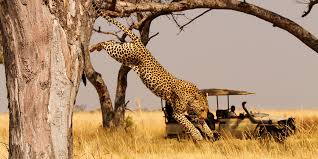
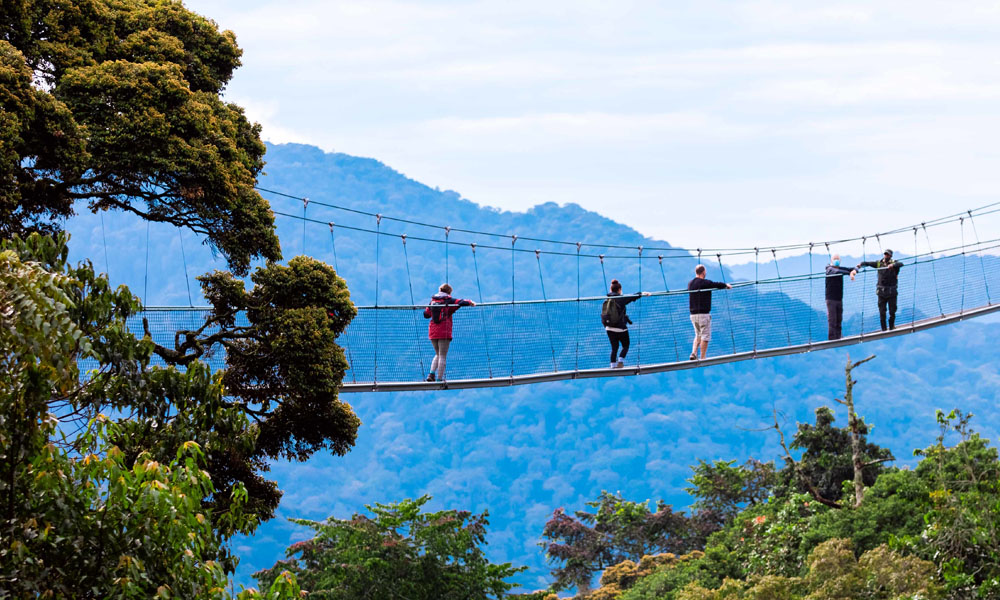
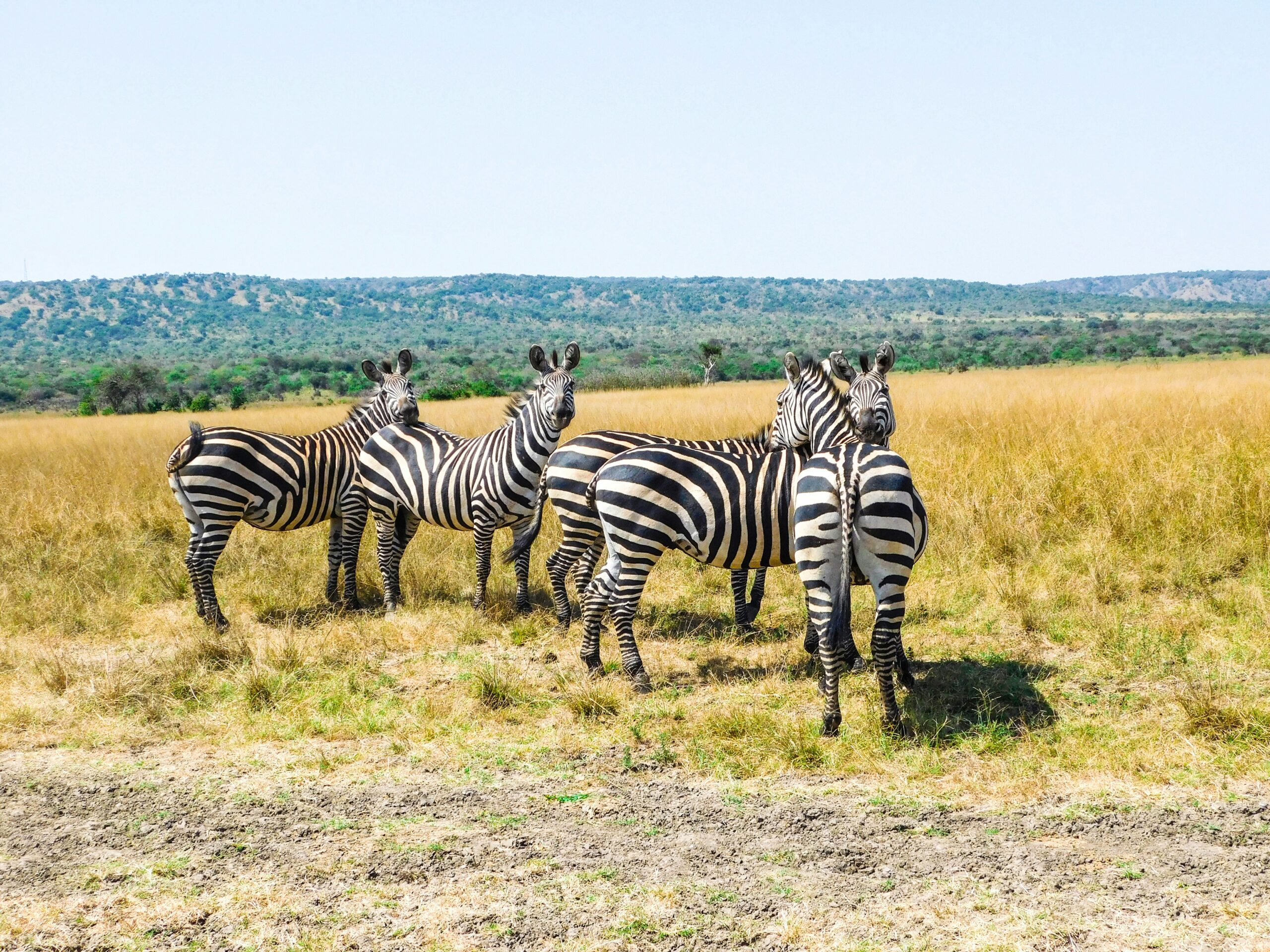
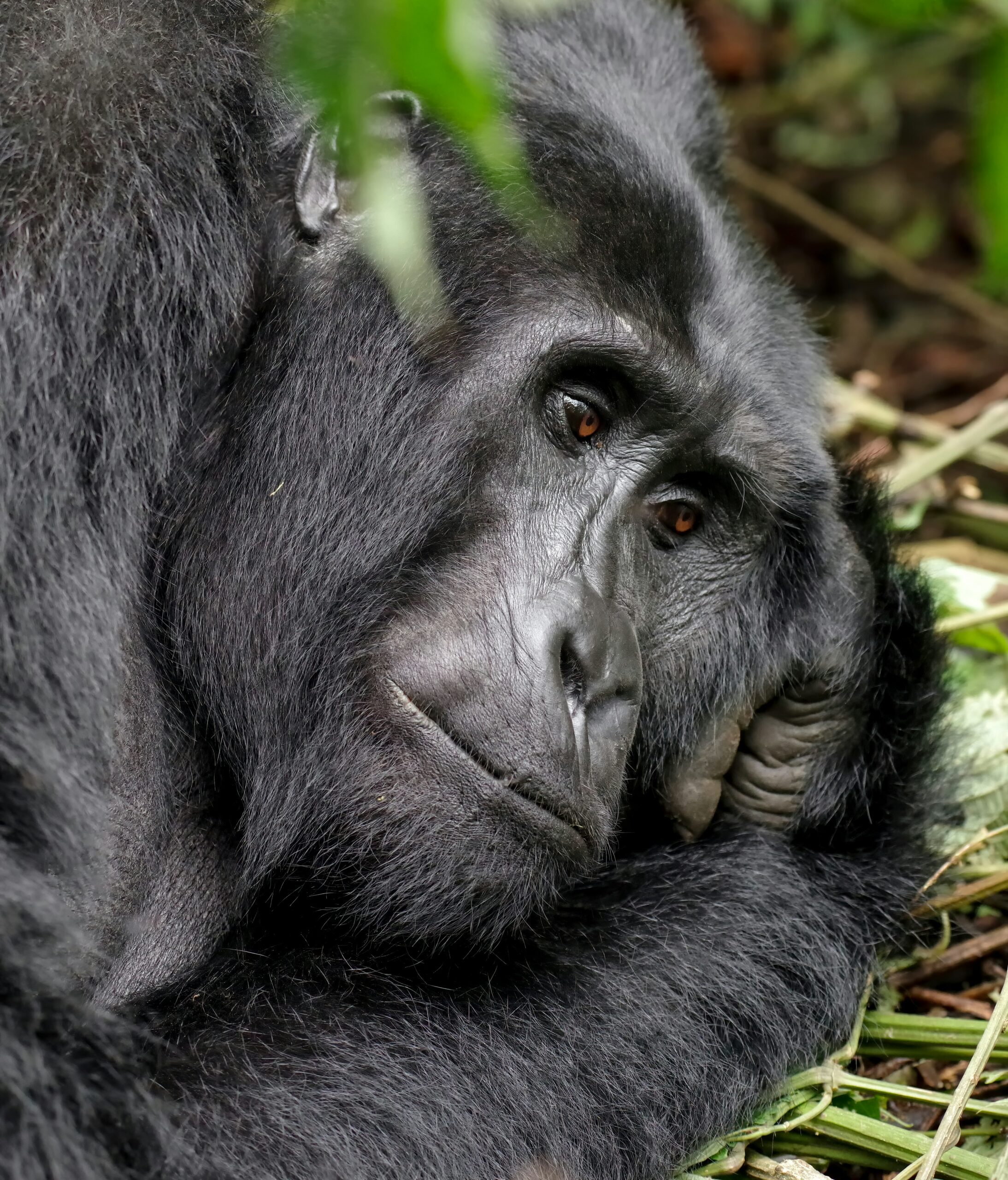
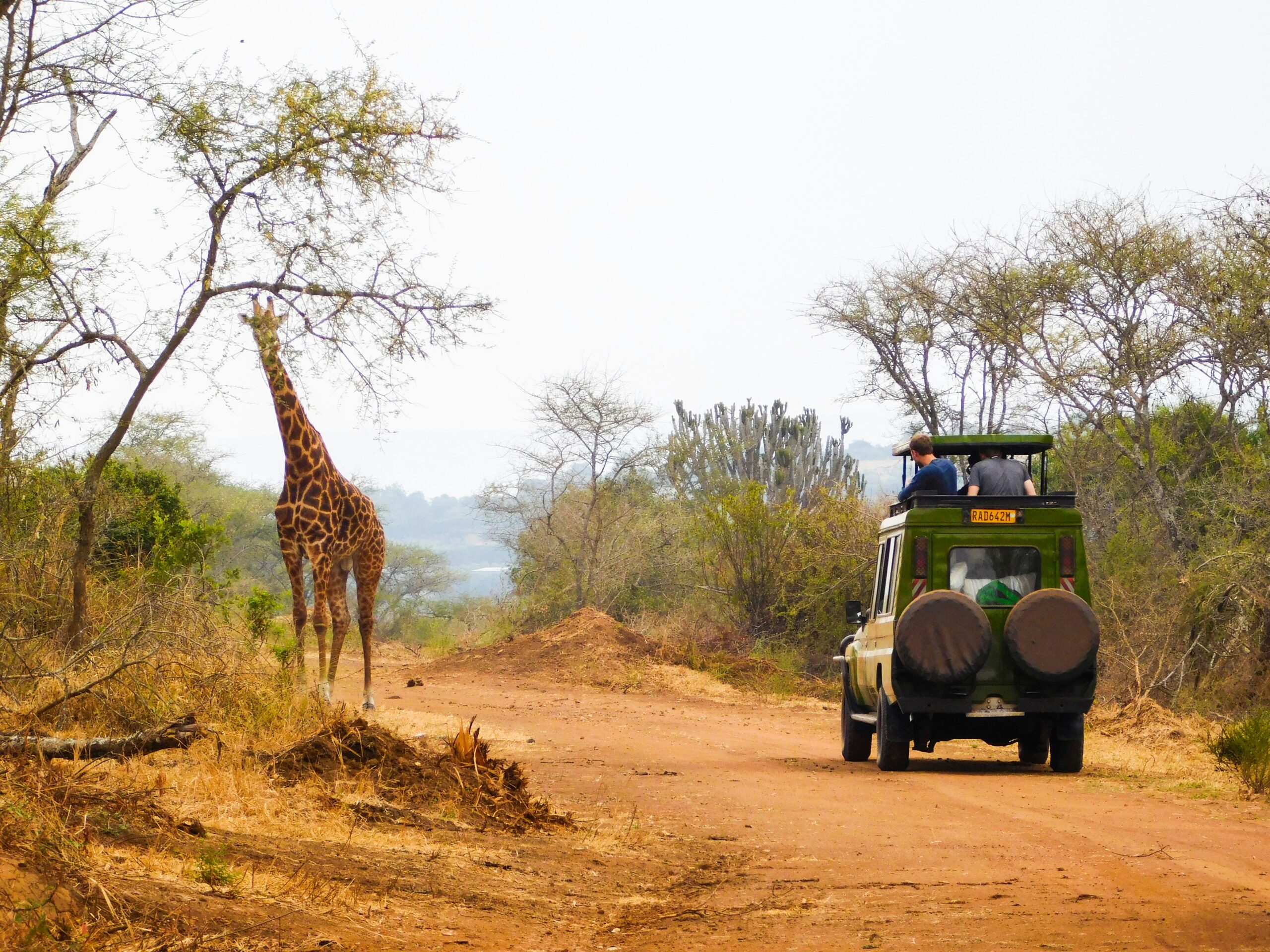
Rwanda’s four national parks span 10% of its territory, showcasing unparalleled biodiversity and serving as pillars of ecotourism, generating vital revenue while protecting endangered species. Volcanoes National Park, in the northwest Virunga Mountains, is Rwanda’s crown jewel—a 160-square-kilometer volcanic wonderland home to over 400 mountain gorillas (one-third of the world’s population). Gorilla trekking here is transcendent: guided hikes through bamboo forests lead to intimate hour-long encounters with habituated families, while golden monkey tracking and volcano hikes (like Bisoke’s crater lake) add adventure. Nyungwe National Park, a 1,019-square-kilometer montane rainforest in the southwest, harbors 13 primate species, including chimpanzees, and Africa’s largest canopy walkway for birdwatching (over 300 species) and orchid spotting. Akagera National Park, in the east, spans 1,122 square kilometers of savannah, wetlands, and lakes—restored from post-genocide devastation, it now boasts the Big Five (reintroduced lions in 2015, rhinos in 2017) and boat safaris on Lake Ihema for hippos and crocodiles. Gishwati-Mukura National Park, the newest (2015) at 34 square kilometers in the west, protects chimpanzees and golden monkeys amid regenerating forests, ideal for eco-hikes and birding.
Kigali, Africa’s cleanest city, impresses with its orderly streets, Genocide Memorial for reflection, and vibrant art scene including Inema Arts Center. Lake Kivu, a 2,700-square-kilometer freshwater gem, offers serene beaches, kayaking, and island hopping amid volcanic scenery, with Gisenyi’s resorts for relaxation. Cultural festivals like Kwita Izina (gorilla naming) blend conservation with music and dance, while tea/coffee plantations provide scenic tours. Huye (formerly Butare) hosts ethnographic museums showcasing royal history, and Musanze’s lava tubes offer underground adventures. Rwanda’s infrastructure consists of excellent roads, safety, and eco-lodges.
In essence, Rwanda is a beacon of hope, conservation and harmony, where cultural vibrancy meets natural majesty, inviting visitors to witness a nation’s triumphant spirit through its hills, wildlife, amidst welcoming people.
Buganda rd, Flats village, Nakasero. P.O. Box 175678 Kampala, Uganda
+256 752062530
info@makuboadventures.com